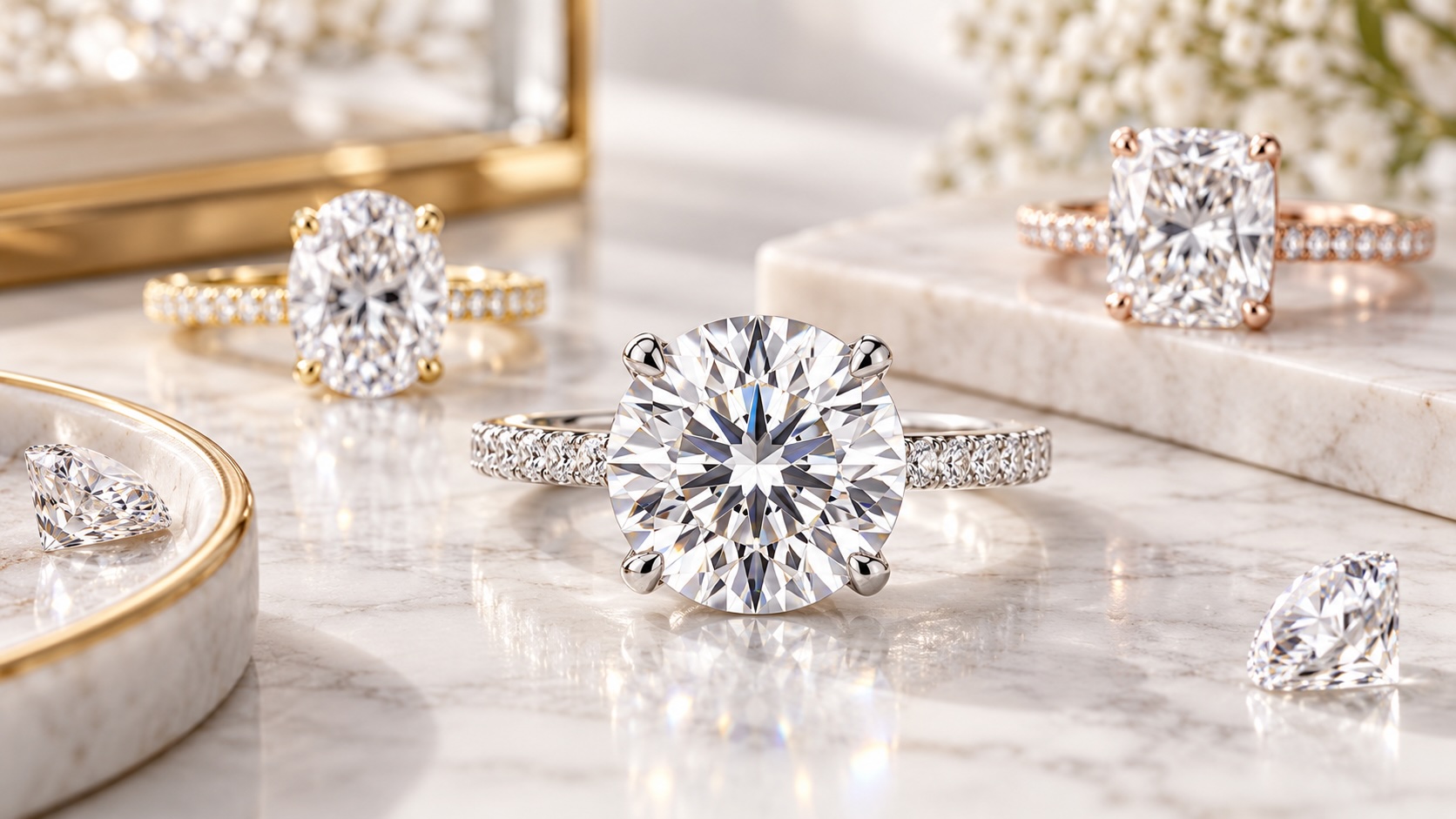
A 2 carat lab-grown diamond gives you substantial size without the price of an equivalent natural diamond.
But that does not mean every 2 carat lab diamond is a good buy.
The lab-grown market is now extremely competitive, and large diamonds are easy to find. The bigger challenge is avoiding stones with weak cut quality, poor transparency, unwanted color nuance, or specifications that look impressive on paper but do not translate into a beautiful diamond.
For most buyers, these are the online retailers I would compare first:
| Rank | Retailer | Best For |
|---|---|---|
| 1 | Whiteflash | Cut quality and light-performance data |
| 2 | Brilliant Earth | Selection and engagement ring settings |
| 3 | Blue Nile | Large searchable inventory |
| 4 | Ritani | Price comparison and value shopping |
My overall recommendation is simple:
Do not buy a 2 carat lab-grown diamond just because it is cheap.
At this size, differences in cut, transparency, color, and proportions become easier to see.
1. Whiteflash: Best for Cut Quality
Best for: Buyers who prioritize diamond performance over finding the absolute lowest price
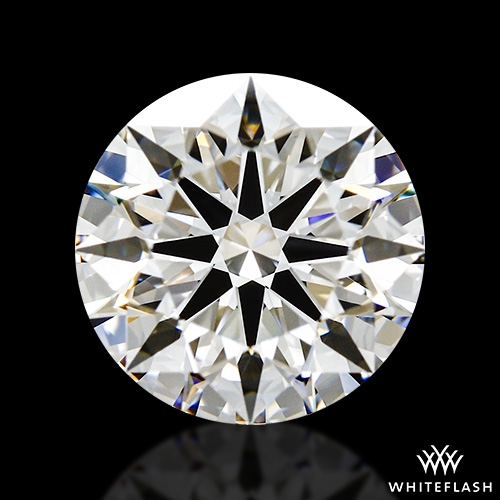
AN HPHT 1.01 ct D VVS1 Round Cut Precision Lab Grown Diamond from Whiteflash
Whiteflash is my first choice for buyers who want a more tightly controlled approach to lab-grown diamond quality.
Its Precision Lab collection is particularly interesting because the emphasis is not simply on offering thousands of diamonds.
The focus is on:
Precision cutting
Light performance
Detailed imaging
Transparency
Physically vetted inventory
Consistency between diamonds
That matters with a 2 carat stone.
A large lab-grown diamond will attract attention, so there is little benefit in saving money if the finished stone has weak brightness, obvious light leakage, or poor transparency.
Why I Rank Whiteflash First
Large online inventories can be useful, but they also put more responsibility on the buyer to identify the good diamonds.
Whiteflash takes a more selective approach.
For in-house round diamonds, buyers can access detailed performance information rather than relying solely on a grading report.
That makes it easier to separate:
a genuinely high-performing 2 carat diamond
from:
a 2 carat diamond that simply has impressive color and clarity grades.
For a quality-focused purchase, I would rather buy a beautifully cut F or G VS diamond than chase unnecessary D color and VVS clarity.
You can also read my guide to the 4Cs of lab-grown diamonds before comparing individual stones.
[info_box title=”” image=”” animate=””]
My First Choice for a Premium 2 Carat Lab Diamond
Start with Whiteflash if your priority is cut quality and detailed performance information rather than simply finding the cheapest 2 carat diamond online.
For a stone this large, I would prioritize cut, transparency, and overall visual quality before paying extra for ultra-high color or clarity.
[/info_box]
2. Brilliant Earth: Best for Selection and Settings
Best for: Buyers who want plenty of 2 carat options combined with a large engagement ring collection
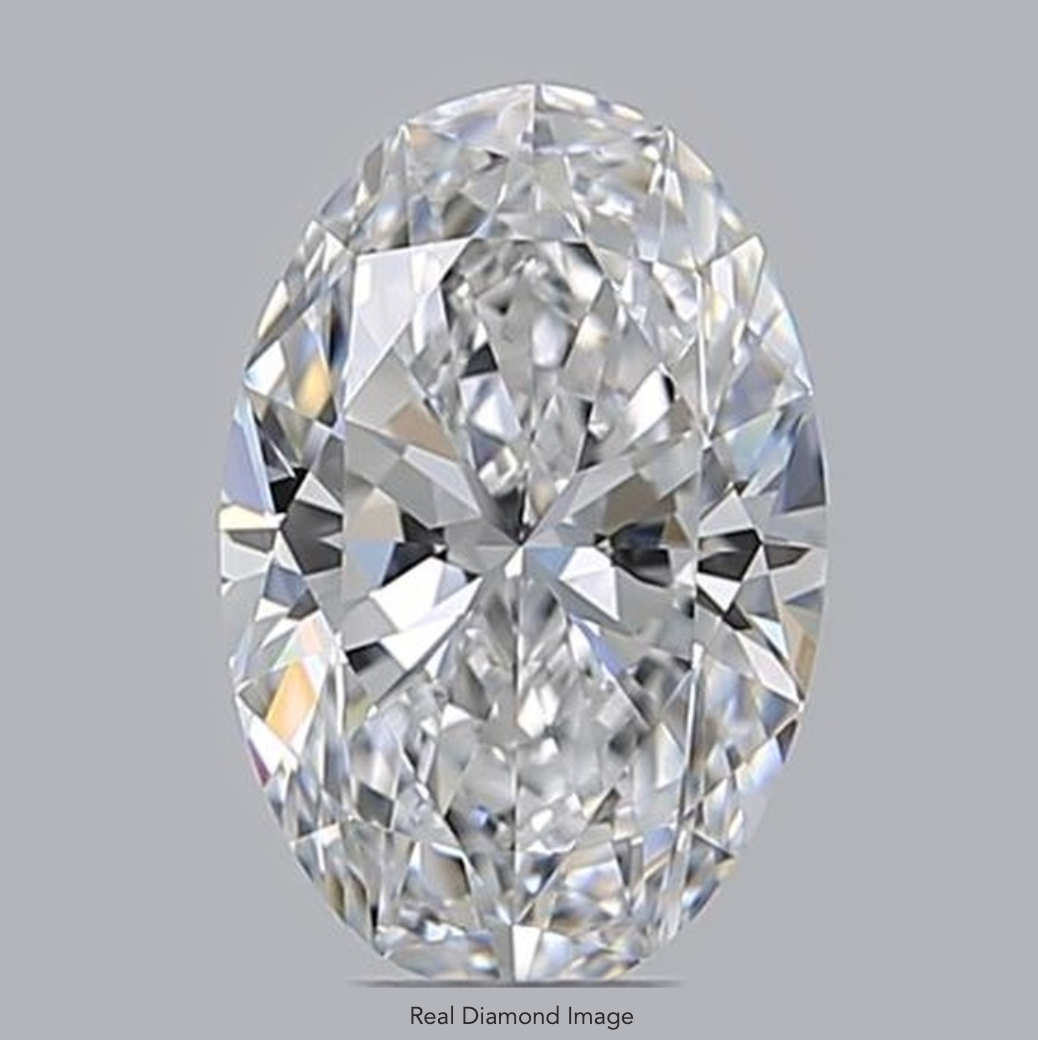
Read my Brilliant Earth review
Brilliant Earth is one of the easiest retailers to shop if you want to compare a 2 carat lab-grown center diamond and engagement ring setting in the same place.
The retailer offers lab-grown diamonds across a wide range of shapes, including:
Round
Oval
Emerald
Radiant
Cushion
Pear
Marquise
Princess
Asscher
This makes Brilliant Earth particularly useful if you know you want approximately 2 carats but have not decided on the shape.
Why Choose Brilliant Earth?
Brilliant Earth is strong for:
Broad lab-grown diamond selection
Numerous diamond shapes
Contemporary engagement ring settings
Classic solitaire designs
Halo and pavé options
Online and showroom shopping
It is especially useful for buyers who care about the finished ring rather than shopping for the loose diamond in isolation.
A 2 carat oval, for example, will look very different in a thin solitaire than it will in a halo or wide pavé band.
Being able to experiment with those combinations can help you decide how much center-stone size you actually need.
3. Blue Nile: Best for Large Inventory
Best for: Buyers who want to compare a large number of 2 carat lab diamonds themselves
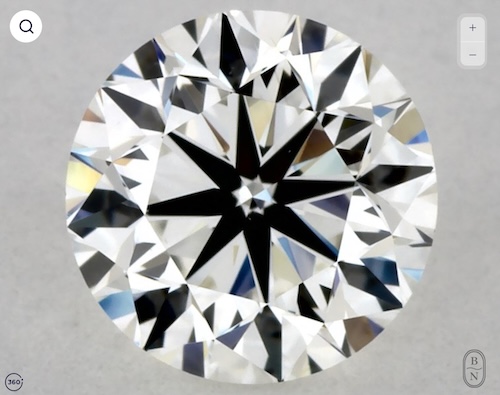
GIA 1.01 Carat H-VS2 Very Good Cut Round Diamond from Blue Nile
Blue Nile is a good choice if you prefer to search through a large database and narrow diamonds down yourself.
You can filter using characteristics such as:
Carat
Shape
Color
Clarity
Cut
Price
Proportions
That is useful when shopping around the 2 carat mark because I would not restrict the search to exactly 2.00 carats.
Try something closer to:
1.85 to 2.15 carats
and compare the actual dimensions.
A well-cut 1.90 carat stone can potentially face up very similarly to a deeper 2.00 carat diamond.
Why Choose Blue Nile?
Blue Nile works particularly well if you:
Enjoy comparing specifications
Want a large selection
Are shopping across several shapes
Want to compare multiple color and clarity combinations
Already understand how to interpret diamond videos and grading reports
The downside of a very large virtual inventory is that quality can vary.
Do not assume that every diamond marked “Ideal” or “Excellent” will provide the same light performance.
You still need to inspect the actual stone.
4. Ritani: Best for Price Comparison
Best for: Budget-conscious buyers who want to see how low 2 carat lab-grown pricing can go

Ritani has historically been useful for shoppers who want a very large selection and transparent pricing.
This is particularly relevant with 2 carat lab-grown diamonds because prices can vary dramatically between stones with apparently similar grading specifications.
Ritani can therefore be a useful benchmark even if you eventually purchase somewhere else.
Why Choose Ritani?
Ritani is worth considering for:
Competitive pricing
Large lab-grown selection
Numerous shapes
Detailed filtering
Comparing diamonds around the 2 carat threshold
However, I would be cautious about choosing purely by price.
A very inexpensive 2 carat diamond may still carry issues such as:
Weak cut quality
Visible inclusions
Brown or gray nuance
Blue nuance
Poor transparency
Unattractive facet patterns
The lowest price does not necessarily represent the best value.
How Big Is a 2 Carat Lab-Grown Diamond?
Carat measures weight, not physical width.
For a round brilliant, a well-proportioned 2 carat diamond is usually somewhere around 8 mm across.
Fancy shapes can vary much more.
An elongated oval or marquise may provide significant finger coverage, while a deep cushion can hide more of its weight underneath the girdle.
This is why I always compare:
carat weight + millimeter dimensions
rather than carat weight alone.
A 2.05 carat diamond is not automatically visually larger than a 1.95 carat stone.
What Color Should a 2 Carat Lab Diamond Be?
There is usually little need to pay for D color.
For many buyers, I would begin around:
F to G color
and potentially consider H depending on the shape and setting.
Round brilliant diamonds are generally more forgiving because their facet pattern can help disguise subtle body color.
Shapes such as:
Emerald
Asscher
Radiant
Oval
can sometimes show color differently, so evaluate the actual video.
Lab-grown diamonds also deserve an additional check for color nuance.
A grading report may say F or G without fully communicating whether the stone has an undesirable blue, brown, or gray appearance.
Read my guide to blue, brown and gray nuance in lab-grown diamonds for more detail.
What Clarity Is Best?
You do not need VVS clarity simply because the diamond is 2 carats.
My goal would be:
eye-clean VS clarity.
VS1 is a comfortable choice.
VS2 can provide excellent value if the inclusions are well positioned and invisible without magnification.
Some SI1 diamonds may also be eye-clean, although I would inspect them more carefully at 2 carats because inclusions are easier to see in larger stones.
Do not pay hundreds of dollars extra for VVS1 or VVS2 if a clean VS diamond looks identical to the naked eye.
You can learn more in my guide to lab-grown diamond inclusions.
Cut Is the Most Important Factor
If you are buying a round brilliant, I would prioritize cut above color and clarity once you have reached acceptable thresholds.
Cut determines how effectively the diamond handles light.
A well-cut 2 carat diamond can produce:
Strong brightness
Fire
Scintillation
Balanced contrast
Excellent edge-to-edge light return
A poorly cut stone may weigh 2 carats but look dark or surprisingly small.
This is where detailed imaging becomes valuable.
A grading certificate gives you measurements and grades.
It cannot fully show you how attractive the diamond actually looks.
Read my lab-grown diamond cut guide before buying.
HPHT vs CVD at 2 Carats
You will find 2 carat diamonds produced using both:
HPHT
CVD
Neither growth method is automatically better.
HPHT diamonds can sometimes display blue nuance associated with trace boron.
CVD diamonds can sometimes display brown or gray tones, strain, or growth-related visual characteristics.
But these are tendencies, not rules.
There are excellent and poor diamonds produced by both methods.
The correct approach is to judge the individual stone.
Do not reject a diamond simply because it was produced using HPHT or CVD.
Likewise, do not assume the production method guarantees quality.
My HPHT lab-grown diamond guide explains the process in more detail.
Watch for Strain and Transparency
Transparency becomes especially important in larger lab-grown diamonds.
A diamond can have excellent color and clarity grades yet still appear slightly:
Hazy
Blurry
Sleepy
Less crisp than expected
Growth strain and other structural characteristics can sometimes affect how cleanly light travels through the diamond.
At 2 carats, these characteristics may become easier to notice.
This is why I prefer retailers that provide strong video and imaging rather than expecting buyers to purchase from certificate numbers alone.
Read my guide to lab-grown diamond strain and striations for more information.
Should You Buy Exactly 2.00 Carats?
Not necessarily.
Two carats is a psychologically attractive milestone, but lab-grown pricing behaves differently from traditional natural diamond pricing.
I would search around the target.
For example:
1.85 to 2.15 carats
Then compare:
Actual dimensions
Cut quality
Color
Clarity
Transparency
Price
You may find that a 1.92 carat diamond provides virtually the same visible size as a 2.00 carat stone.
Alternatively, a 2.10 carat stone may cost only slightly more and provide better dimensions.
Do not let the certificate number dictate the purchase.
[info_box title=”” image=”” animate=””]
Compare Quality Before Chasing the Cheapest Price
For a more tightly vetted approach, start with Whiteflash.
For a broad selection of shapes and engagement ring settings, compare Brilliant Earth.
And if you want a huge searchable inventory, Blue Nile is useful for seeing how 2 carat diamonds vary across color, clarity, proportions, and price.
The goal should be to find the best 2 carat diamond for your budget, not simply the cheapest stone that meets the weight requirement.
[/info_box]
Which Shape Looks Largest at 2 Carats?
Shape has a major influence on perceived size.
Round
A 2 carat round provides strong visual impact and maximum classic brilliance.
Oval
Ovals can look especially large because their elongated outline covers more of the finger.
Marquise
Marquise diamonds generally provide excellent face-up coverage for their carat weight.
Pear
Pears also look relatively large because of their elongated silhouette.
Emerald
Emerald cuts can provide excellent spread, although depth and length-to-width ratio vary significantly.
Cushion
Cushions can carry more weight below the surface and may appear smaller than elongated shapes of the same carat weight.
If visible size is your priority, compare millimeter dimensions rather than simply choosing the heaviest diamond.
How Much Should You Spend on a 2 Carat Lab-Grown Diamond?
There is no single correct amount.
The lab-grown market has experienced significant price compression, and diamonds with similar grading reports can be listed at very different prices.
Instead of choosing a price target first, I would establish minimum quality criteria.
For a round diamond, that might mean:
Excellent cut
F-G color
VS1-VS2 clarity
Eye-clean appearance
Good transparency
Attractive proportions
Reliable grading report
Then compare prices within that group.
If one stone is dramatically cheaper than everything else, work out why before assuming you have found a bargain.
Are 2 Carat Lab-Grown Diamonds Worth It?
If your priority is visible size and beauty, they can offer excellent value.
A 2 carat natural diamond of comparable quality can require a much larger budget.
Lab-grown diamonds therefore make sizes around 2 carats accessible to far more buyers.
However, I would not buy a lab-grown diamond as an investment.
The market continues to evolve, production has increased, and retail prices have fallen considerably over time.
Buy it because you want:
A beautiful diamond
A larger center stone
Good value at the point of purchase
not because you expect it to appreciate.
Frequently Asked Questions
Where is the best place to buy a 2 carat lab-grown diamond?
My first choice is Whiteflash for buyers who prioritize cut quality and detailed performance information.
Brilliant Earth is strong for selection and engagement ring designs, Blue Nile offers a very large searchable inventory, and Ritani is useful for price comparison.
Is 2 carats big for a lab-grown diamond?
Yes.
A 2 carat diamond creates substantial presence on the finger without reaching the oversized appearance of some 3 to 5 carat lab-grown stones.
What color should a 2 carat lab diamond be?
F or G can provide an excellent balance of whiteness and value.
H may also work well depending on diamond shape and setting.
There is usually little need to pay extra for D color unless you specifically want the highest color grades.
Is VS2 clarity good enough for 2 carats?
It can be.
A genuinely eye-clean VS2 can provide excellent value.
Always inspect the actual video because inclusion type and location matter more than the grade alone.
Is a 2 carat lab-grown diamond expensive?
Compared with an equivalent natural diamond, 2 carat lab-grown diamonds are significantly more accessible.
Prices vary widely depending on cut, color, clarity, retailer, and overall quality.
Should I buy a 2 or 3 carat lab diamond?
Two carats is the more balanced choice for many engagement rings.
Three carats provides more impact, but the diamond can begin to dominate the hand depending on finger size and shape.
Choose based on actual dimensions rather than carat weight alone.
Is IGI certification good for lab-grown diamonds?
IGI is widely used for lab-grown diamond grading.
Whatever laboratory issued the report, remember that certification should be combined with actual imagery and visual assessment.
Are cheap 2 carat lab diamonds bad?
Not automatically.
Lab-grown pricing is highly competitive.
However, an unusually cheap diamond deserves careful inspection for poor cut, unwanted nuance, inclusions, transparency issues, or unattractive proportions.
Final Verdict: Best Places to Buy 2 Carat Lab-Grown Diamonds
Two carats is one of the most attractive sizes in the lab-grown market.
It provides obvious visual impact while remaining practical for an everyday engagement ring.
But the amount of inexpensive inventory available means buyers need to be more selective, not less.
My rankings are:
1. Whiteflash for cut quality, detailed performance information, and physically vetted inventory.
2. Brilliant Earth for broad selection and extensive engagement ring designs.
3. Blue Nile for a huge searchable inventory and plenty of comparison options.
4. Ritani for competitive pricing and value-focused research.
If I were buying, I would start with Whiteflash and establish what a high-quality 2 carat lab-grown diamond should look like.
I would then compare that against the wider inventories available through Brilliant Earth and Blue Nile.
Most importantly, do not become distracted by D color, VVS clarity, or an unusually low price.
For a 2 carat lab-grown diamond, I would prioritize:
Excellent cut
Strong transparency
Attractive proportions
Neutral color
Eye-clean clarity
Good visual performance
A well-cut 2 carat F VS2 can be a much better diamond than a poorly performing 2 carat D VVS1.
Buy the diamond you can see, not the grades on the certificate.