How much should you spend on a lab-grown diamond engagement ring?
You may have heard that an engagement ring should cost three months of your salary. Others will tell you two months, while older advice sometimes refers to just one month.
My advice is much simpler:
Spend enough to buy a beautiful, well-made engagement ring that you can comfortably afford, and ignore arbitrary salary rules.
This is particularly important with lab-grown diamonds.
Lab-grown diamonds have changed engagement ring pricing dramatically. Buyers can now access carat weights, color grades, and clarity grades that would have required a much larger budget in a natural diamond.
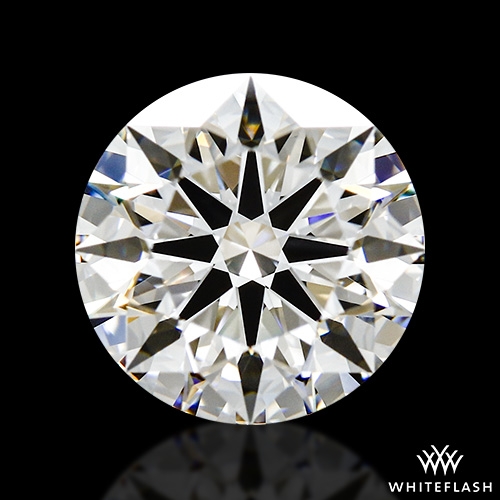
But that does not mean you should simply buy the biggest diamond possible.
A good lab-grown engagement ring still needs:
- Excellent cut quality
- Attractive crystal quality
- Good transparency
- Appropriate color
- Eye-clean clarity
- Reliable certification
- A well-made setting
- Good proportions
- Strong visual performance
The lowest-priced 3 carat diamond is not necessarily better value than an outstanding 2 carat diamond.
Before deciding how much to spend, it is worth understanding both your budget and what actually determines the quality of a lab-grown diamond.
My complete guide to the 4Cs of lab-grown diamonds is a good place to start.
Quick Answer: How Much Should You Spend?
For many buyers, I think $2,000 to $5,000 is already a substantial lab-grown engagement ring budget.
That does not mean you need to spend that amount.
A beautiful ring can cost less, while premium designs, very large diamonds, designer settings, or exceptional-quality stones can take the price significantly higher.
A rough framework might look like this:
| Total Ring Budget | What I Would Focus On |
|---|---|
| Under $1,500 | Smaller center stone, simple setting, prioritize cut |
| $1,500-$2,500 | Excellent value territory for a quality lab-grown ring |
| $2,500-$4,000 | Larger center stone and greater setting flexibility |
| $4,000-$6,000 | Premium-quality diamond, substantial size, or more elaborate setting |
| $6,000-$10,000 | Very large diamonds, premium craftsmanship, designer settings |
| $10,000+ | Luxury purchase rather than a necessary spend |
These are not rules.
Someone earning $200,000 per year might happily spend $3,000. Someone else may have specifically saved $8,000 for the ring they have always wanted.
What matters is whether the purchase makes sense for you.
The Three-Month Salary Rule: Where Did It Come From?
The famous three-month salary rule is not an ancient engagement tradition.
It is largely the result of diamond marketing.
Diamond engagement rings existed long before modern advertising. One of the most famous early examples dates to 1477, when Archduke Maximilian of Austria gave Mary of Burgundy a diamond engagement ring.
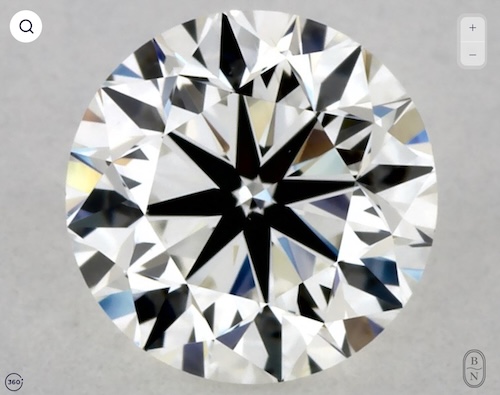
GIA 1.01 Carat H-VS2 Very Good Cut Round Diamond from Blue Nile
However, diamonds did not become the dominant engagement ring choice until much later.
During the 20th century, De Beers and its advertising agency N.W. Ayer worked to create a much stronger association between diamonds, romance, and marriage.
De Beers launched its first U.S. advertising campaign in 1939, and in 1947 copywriter Frances Gerety created the famous “A Diamond Is Forever” slogan. You can see the timeline on the official De Beers history page.
The salary concept developed alongside this marketing.
Earlier campaigns promoted approximately one month’s salary as an appropriate engagement ring spend. Later campaigns in the U.S. pushed this toward two months’ salary, while three-month messaging appeared in markets including Japan.
Over time, “three months’ salary” became commonly repeated as though it were a genuine financial rule.
It isn’t.
Contemporary reporting on the history of diamond advertising confirms that the salary benchmark developed from marketing rather than financial planning principles.
What Does the Three-Month Rule Actually Mean in Dollars?
This is where the rule starts to look particularly strange.
If you interpreted it using gross salary:
| Annual Salary | Monthly Gross Salary | Three Months’ Salary |
| $40,000 | $3,333 | $10,000 |
| $60,000 | $5,000 | $15,000 |
| $80,000 | $6,667 | $20,000 |
| $100,000 | $8,333 | $25,000 |
| $150,000 | $12,500 | $37,500 |
| $200,000 | $16,667 | $50,000 |
Should someone earning $100,000 automatically spend $25,000 on an engagement ring?
I don’t think so.
That person could have:
- A mortgage
- Student loans
- Childcare costs
- Wedding expenses
- A house deposit to save
- Credit card debt
- Very little cash savings
Another person earning $60,000 might have substantial savings, no debt, and actively want to spend more.
Salary alone tells you very little about what you can comfortably afford.
And with lab-grown diamonds, spending three months’ salary becomes even harder to justify purely on the basis of getting a sufficiently impressive diamond.
Lab-Grown Diamonds Have Changed the Engagement Ring Budget
The traditional salary rule developed around natural diamonds.
Lab-grown diamonds operate in a completely different pricing environment.
They are real diamonds, possessing essentially the same chemical, physical, and optical properties as natural diamonds, but they are produced above ground rather than formed naturally within the Earth. GIA explains this distinction in its guide to natural and laboratory-grown diamonds.
Because lab-grown diamonds can be produced rather than depending on the supply of naturally occurring rough diamonds, they are significantly less expensive.
This allows buyers to choose:
- Larger carat weights
- Higher color grades
- Higher clarity grades
- Better settings
- Higher-quality cutting
without requiring the same budget as a comparable natural diamond.
This is one reason the idea of spending three months’ salary feels particularly outdated for lab-grown engagement rings.
You do not need to spend $15,000, $20,000, or $30,000 merely to put a substantial diamond on someone’s finger.
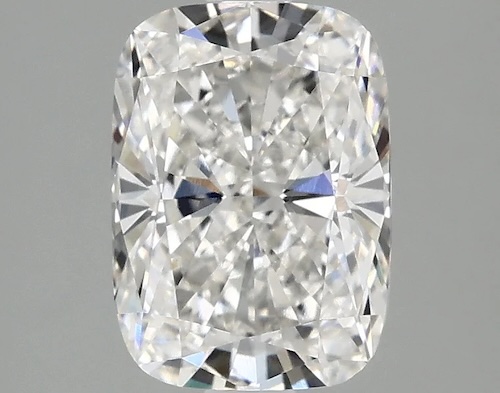
1.90 Carat Cushion Lab Grown Diamond from Brilliant Earth
Looking for a High-Quality Lab-Grown Engagement Ring?
Whiteflash Precision Lab branded diamonds are my first choice for buyers who prioritize cut quality and verified light performance. Rather than chasing the lowest possible price, the Precision Lab proposition focuses much more heavily on how the finished diamond actually performs. Read my complete Whiteflash review. Whiteflash describes its Precision Lab collection as being cut to exacting standards with an emphasis on optimal light performance.
For a broader selection, I also recommend comparing Blue Nile, particularly if you want a large inventory to search.
Brilliant Earth is another strong option if setting design, customization, and a wide choice of lab-grown diamonds are priorities.
How Much Should You Spend Based on Your Salary?
I would not calculate your engagement ring budget by multiplying your monthly salary.
Instead, use salary as just one part of the picture.
Ask yourself:
- What do I earn after tax?
- How much do I already have saved?
- Do I have expensive debt?
- What other major expenses are approaching?
- Am I also paying for a wedding?
- Do we want to buy a home?
- How much would I be comfortable spending without regretting it?
- What kind of ring does my partner actually want?
If you want to use salary as an anchor, think about affordability rather than obligation.
Earning more gives you the option to spend more.
It does not create a requirement to do so.
The Ring Should Not Put You Into Financial Difficulty
An engagement ring is supposed to celebrate the beginning of a marriage.
Starting that marriage with unnecessary high-interest debt does not make the ring more romantic.
I would therefore be cautious about any budget that requires you to:
- Drain your emergency savings
- Carry expensive credit card debt
- Delay essential purchases
- Miss regular financial commitments
- Abandon important savings goals
Financing is not automatically a problem.
A genuinely affordable payment plan can simply be a convenient way to manage cash flow.
But there is a significant difference between choosing to finance something you can afford and needing financing to make an unaffordable purchase possible.
Don’t Assume More Expensive Means Better
This is particularly important in the lab-grown diamond market.
Prices vary enormously.
A more expensive diamond may have:
- Better cut precision
- Better crystal quality
- Better transparency
- Better grading
- More desirable proportions
- Stronger light performance
But sometimes you are simply paying more for:
- Higher color than you need
- Higher clarity than you can see
- A bigger carat number
- Branding
- A more elaborate setting
The goal should be to understand why one diamond costs more than another.
My guide on why you should avoid very cheap lab-grown diamonds is particularly relevant here.
Cheap does not automatically mean bad.
But the lowest-priced lab diamond may be cheap because of weak cut quality, unattractive color nuance, strain, haziness, poor transparency, inadequate imagery, or other quality concerns.
Quality Is Still Hugely Important
Lab-grown diamonds may cost less, but the rules of diamond beauty have not disappeared.
GIA notes that laboratory-grown diamonds can range significantly in quality just like natural diamonds. They can be beautifully cut with excellent brightness, fire, and scintillation, or they can be mediocre.
This is why I would never say:
“I have $5,000, so show me the biggest lab diamond available.”
Instead, I would say:
“Show me the best-quality diamond within the size range I want.”
That is a very different shopping strategy.
Prioritize Cut Above Everything Else
If I am allocating an engagement ring budget, cut is where I am least willing to compromise.
Cut determines how efficiently the diamond interacts with light.
A well-cut diamond should produce strong:
- Brightness
- Fire
- Scintillation
- Contrast
- Visual balance
A badly cut 3 carat diamond can look disappointingly dull.
An outstanding 2 carat diamond may be dramatically more impressive.
Read my complete lab diamond cut guide before shopping.
If cut quality is your primary concern, this is also why I place such a strong emphasis on Whiteflash Precision Lab branded diamonds. Whiteflash’s current Precision Lab offering specifically focuses on precision cutting rather than treating all lab-grown diamonds with similar report grades as interchangeable.
Don’t Waste Money on Unnecessary Color
The highest color grade is D.
That does not mean everybody should buy a D-color diamond.
Lab-grown diamonds use the same familiar color-grading concepts as natural diamonds, and you can learn more in my lab-grown diamond color guide.
For many engagement rings, dropping slightly in color can produce significant savings without creating an obvious visual difference.
The appropriate grade will depend on:
- Shape
- Setting metal
- Diamond size
- Cut quality
- Personal sensitivity to color
A D VVS1 diamond may look spectacular on paper, but an F VS1 or G VS2 might look virtually indistinguishable in everyday viewing while costing substantially less.
That money might be better spent elsewhere.
Don’t Waste Money on Microscopic Clarity Either
The same principle applies to clarity.
The objective for most engagement ring buyers should be:
Eye clean.
Once you cannot see the inclusions without magnification, spending considerably more money to move further up the clarity scale often produces little visible benefit.
That does not mean VVS diamonds are bad purchases.
If you value extremely high specifications, buy them.
But understand what you are paying for.
A VS1 or VS2 diamond can often provide everything most buyers want visually.
How Much Should You Spend at Different Lab Diamond Sizes?
Rather than starting with salary, I prefer to work backward from the size and quality you actually want.
Around 1 Carat
There is little reason to establish an enormous engagement ring budget if you specifically want a modest 1 carat lab-grown center stone.
At this size, concentrate on:
- Outstanding cut
- Good color
- Eye-clean clarity
- Reliable certification
- A quality setting
You may be able to keep the complete ring well below the budgets traditionally associated with diamond engagement rings.
Around 1.5 Carats
A 1.5 carat lab-grown diamond offers noticeable presence without becoming particularly large.
This can be an excellent sweet spot for someone who wants more visual impact but still prefers a relatively traditional engagement ring size.
Around 2 Carats
Two carats is where lab-grown diamonds become especially compelling.
A high-quality 2 carat natural diamond can require a substantial budget.
Lab-grown makes this size much more accessible.
I would still resist the temptation to sacrifice cut or crystal quality just to reach 2.00 carats.
Around 3 Carats
Three carats is now a realistic engagement ring option for buyers who would never consider spending natural-diamond prices at this weight.
At this size, however, quality becomes even more noticeable.
You are looking at a much larger object.
Problems such as:
- Poor cut
- Visible inclusions
- Gray or brown nuance
- Strain
- Haziness
- Weak transparency
can be easier to appreciate.
Read my guide to buying large lab-grown diamonds before chasing maximum carat weight.
4 Carats and Above
Lab-grown technology has made extremely large diamonds accessible.
That does not mean everybody should buy one.
Past a certain point, the decision becomes primarily aesthetic.
A 4 or 5 carat center stone makes a very strong statement and may not be practical or desirable for every wearer.
If that is the look you want, great.
Just make sure size is not replacing quality.
Remember to Budget for the Setting
Your diamond is not the entire engagement ring.
The setting can consume a meaningful part of the total budget.
A simple solitaire may allow you to allocate most of your money to the center stone.
More elaborate designs can add considerably more.
Examples include:
- Pavé settings
- Hidden halos
- Full halos
- Three-stone rings
- Vintage-inspired designs
- Platinum settings
- Designer settings
- Custom-made rings
Suppose your total budget is $4,000.
Spending the entire $4,000 on the loose diamond and only then looking at settings is a mistake.
Instead, you might allocate something like:
Center diamond: $2,500-$3,000
Setting: $1,000-$1,500
The exact split depends entirely on what you value.
Someone wanting a simple solitaire might put much more into the diamond.
Someone who has fallen in love with an intricate designer setting may do the opposite.
The Setting Can Be the Long-Term Cost
Lab-grown diamond prices have fallen considerably over time as production technology and supply have developed.
Gold, platinum, skilled jewelry manufacturing, and designer craftsmanship do not necessarily follow the same pricing dynamics.
That means the setting can represent a surprisingly significant percentage of a lab-grown engagement ring’s total cost.
Do not treat it as an afterthought.
A large, beautifully cut lab diamond deserves a secure and well-made ring.
Certification Matters
I would expect a significant lab-grown diamond to come with independent grading documentation.
Two of the most important laboratories you will regularly encounter are:
- GIA
- IGI
You can compare them in my guide to IGI vs. GIA lab-grown diamonds.
I have also written a dedicated guide explaining how to read an IGI lab-grown diamond report.
Certification gives you an independent record of characteristics such as:
- Carat weight
- Color
- Clarity
- Measurements
- Polish
- Symmetry
- Growth origin
But remember:
A grading report does not guarantee that a diamond is beautiful.
The certificate gives you information.
It does not replace visual evaluation.
Read my complete lab diamond certification guide before purchasing.
HPHT vs. CVD Shouldn’t Determine Your Budget
Lab-grown diamonds are primarily created using one of two methods:
- High Pressure High Temperature, or HPHT
- Chemical Vapor Deposition, or CVD
GIA confirms that both methods are widely used to create gem-quality laboratory-grown diamonds.
You can read my complete HPHT lab-grown diamond buying guide for more information.
I would not automatically spend more simply because a diamond is HPHT or CVD.
Instead, evaluate the actual stone.
Both growth methods can produce beautiful diamonds and both can produce stones with characteristics worth avoiding.
What About Resale Value?
This needs to be part of the budget discussion.
Do not buy a lab-grown engagement ring because you expect the diamond itself to appreciate.
Lab-grown diamond pricing has changed rapidly as production has become more efficient.
The secondary market is also substantially less established than the natural-diamond resale market.
This is another reason I advise against spending an arbitrary three months’ salary.
Buy the ring because:
- You love it
- You can comfortably afford it
- You intend to wear it
- You value the beauty it provides
Not because you expect to recover your original purchase price later.
My article on whether lab-created diamonds are worth anything explores this subject in more detail.
Should You Spend More for Better Quality?
Sometimes, absolutely.
The fact that lab-grown diamonds are affordable does not mean the cheapest available stone is the best deal.
I am comfortable paying more when the additional cost buys something meaningful.
Examples include:
- Significantly better cut
- Better optical symmetry
- Verified light performance
- Better transparency
- Cleaner crystal quality
- Better craftsmanship
- Better customer service
- A higher-quality setting
I am much less interested in paying more simply to move:
F color to D
or:
VS1 clarity to VVS1
when there is no meaningful visual improvement for the buyer.
Spend money where you can see the difference.
My Recommended Places to Buy a Lab-Grown Engagement Ring
For buyers who want to put quality first, my top recommendation is Whiteflash and its Precision Lab branded diamonds. Whiteflash combines its lab-grown offering with a strong focus on precision cutting and diamond light performance.
Blue Nile is the option I would look at if you want a much larger inventory and the ability to compare many diamonds across different shapes, sizes, and specifications.
Brilliant Earth is particularly worth considering if engagement ring design and customization are priorities. Its current lab-grown engagement ring builder lets shoppers combine a lab-grown center diamond with their preferred setting.
You can also compare the wider market in my Best Lab Diamond Retailers 2026 guide and my guide to choosing the right place to buy a lab diamond engagement ring.
Should You Spend Less Because It Is Lab-Grown?
Not necessarily.
This is an important distinction.
You should not think:
“A natural ring would have cost $10,000, so I must only spend $2,000 because this is lab-grown.”
Maybe you still want to spend $5,000.
The savings can be used to obtain:
- A bigger diamond
- Better cut
- A more expensive setting
- Platinum instead of gold
- A designer ring
- Side diamonds
- A wedding band
Or you can simply keep the money.
Both are valid choices.
Lab-grown gives you more flexibility.
That is one of its biggest advantages.
Should Couples Choose the Budget Together?
In many relationships, yes.
The idea that one person secretly chooses a ring, secretly determines an enormous budget, and then surprises their partner with every aspect of the purchase is no longer the only way to approach an engagement.
Plenty of couples now discuss:
- Ring style
- Diamond shape
- Natural vs. lab-grown
- Carat weight
- Metal
- Budget
before the proposal.
The exact ring or proposal can still be a surprise.
There is nothing unromantic about making sure thousands of dollars are being spent on something the recipient actually wants.
How Much Would I Personally Budget?
If someone came to me without a predetermined budget and simply wanted a high-quality lab-grown engagement ring, I would probably begin by exploring approximately:
$1,500-$2,500
A sensible starting point for a well-selected ring without trying to maximize carat weight.
$2,500-$4,000
A very comfortable budget for many lab-grown engagement ring shoppers.
This gives you flexibility around both center-stone size and setting.
$4,000-$6,000
Enough to start being very selective about quality while also considering larger diamonds or more elaborate settings.
$6,000-$10,000
A luxury lab-grown engagement ring budget.
At this point, you should be expecting something genuinely impressive in size, diamond quality, setting quality, or all three.
$10,000+
Perfectly reasonable if you want to spend that much.
But it is difficult to argue that you need to spend that much to obtain a spectacular lab-grown diamond engagement ring.
That distinction is important.
What Percentage of Your Salary Should an Engagement Ring Cost?
There is no correct percentage.
Zero financial planning principle says:
“Your engagement ring must equal X% of your annual salary.”
Think about two people earning the same salary.
Person A
- $80,000 salary
- $30,000 savings
- No debt
- Low housing costs
Person B
- $80,000 salary
- $2,000 savings
- $20,000 credit card debt
- High rent
- Student loans
Applying the same ring budget to both would make no sense.
Their salaries are identical.
Their financial situations are completely different.
What If Your Partner Expects Three Months’ Salary?
Talk about it.
Often the desire for an expensive engagement ring is actually a desire for something specific:
- A particular carat size
- A certain design
- A designer brand
- A substantial-looking ring
- A particular shape
Lab-grown diamonds can make many of those objectives possible without requiring the traditional natural-diamond budget.
Instead of debating whether a ring should cost three months’ salary, work out what the desired ring actually costs.
You may discover the answer is far less than expected.
Is a $2,000 Lab-Grown Engagement Ring Cheap?
No.
Price and quality are not the same thing.
A thoughtfully selected $2,000 lab-grown engagement ring can be beautiful.
The question is what that $2,000 bought.
I would rather see:
Excellent cut + sensible color + eye-clean clarity + simple setting
than:
Huge carat weight + weak cut + poor transparency + cheap setting
The first is good value.
The second is simply cheap.
Again, read my guide on why you should avoid cheap lab-grown diamonds to understand the difference.
Is $5,000 a Lot for a Lab-Grown Engagement Ring?
Yes, I would consider $5,000 a substantial lab-grown engagement ring budget.
It should give you meaningful choice.
At that level, you should not feel forced to compromise heavily on the characteristics that actually affect beauty.
That does not mean every $5,000 ring is excellent.
You still need to evaluate the diamond and setting.
But the budget itself should be enough to put you firmly into high-quality territory.
Is $10,000 Too Much for a Lab-Grown Engagement Ring?
Not if you can comfortably afford it and genuinely want the ring.
But it is much more of a luxury choice than a necessity.
I would expect a $10,000 lab-grown engagement ring to justify its price through some combination of:
- Very large carat weight
- Exceptional cut quality
- Premium setting
- Platinum
- Designer craftsmanship
- Side stones
- Highly specific requirements
I would not spend $10,000 merely because an outdated formula told me my salary allowed it.
Frequently Asked Questions
Is the three-month salary rule real?
It exists as a popular saying, but it is not a genuine financial rule.
Salary-based engagement ring spending emerged through 20th-century diamond advertising. U.S. campaigns eventually promoted two months’ salary, while higher salary benchmarks appeared in some other markets.
How much should the average person spend on a lab-grown engagement ring?
There is no correct amount.
For many buyers, approximately $2,000-$5,000 provides ample room to find an excellent lab-grown engagement ring, but good rings can cost less and luxury rings can cost considerably more.
Should I spend one month’s salary on an engagement ring?
You can if that produces a comfortable budget, but there is no particular reason to use one month’s salary.
Base the purchase on your savings, expenses, debt, priorities, and desired ring instead.
Should I finance a lab-grown engagement ring?
Financing can be useful if the payments are comfortably affordable.
I would be cautious about using expensive debt to purchase a ring that is otherwise beyond your means.
Is a more expensive lab-grown diamond better?
Not necessarily.
Higher prices can reflect better quality, but they can also result from larger carat weight, unnecessarily high color or clarity, branding, or retailer margins.
Assess the actual diamond.
What is the most important quality factor?
For me, cut quality.
A well-cut diamond maximizes brilliance, fire, and scintillation.
Read my lab-grown diamond cut guide before purchasing.
Where should I buy a lab-grown engagement ring?
My first choice for buyers prioritizing cut quality is Whiteflash and its Precision Lab branded diamonds.
I would also compare Blue Nile for selection and Brilliant Earth for its broad range of diamond and setting combinations.
Final Verdict: How Much Should You Spend?
Forget the three-month rule.
It was born from diamond marketing, not personal finance, and the enormous changes brought about by lab-grown diamonds make a fixed salary multiplier even less useful today.
Instead, begin with three questions:
What can I comfortably afford?
What kind of ring does my partner actually want?
What level of diamond quality am I unwilling to compromise on?
Then work backward.
For many buyers, somewhere around $2,000 to $5,000 will provide more than enough budget to create a beautiful lab-grown engagement ring.
You may spend less.
You may spend considerably more.
Neither choice is automatically right or wrong.
The key is to avoid spending more merely because someone once told you an engagement ring should represent a certain number of paychecks.
And do not fall into the opposite trap of buying the biggest, cheapest lab-grown diamond you can find.
Lab-grown diamonds are more affordable than natural diamonds, but quality still matters enormously.
Prioritize:
- Cut
- Light performance
- Crystal quality
- Certification
- Sensible color
- Eye-clean clarity
- A well-made setting
For buyers focused on the highest level of cut quality, I would start with Whiteflash and its Precision Lab branded diamonds. For broader comparison shopping, read my Blue Nile review, while buyers particularly interested in setting choice and customization should also look at my Brilliant Earth review.
Your engagement ring should represent your relationship.
It does not need to represent three months of your salary.