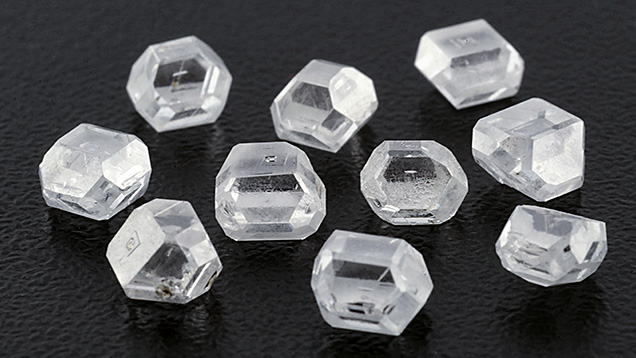
HPHT Lab-Grown Diamonds: A Complete Buying Guide

by Tom Thornbridge

HPHT lab-grown diamonds are created by reproducing the intense heat and pressure associated with natural diamond formation. The process can produce colorless, high-clarity diamonds with excellent transparency, making HPHT stones an attractive option for engagement rings and fine jewelry.

However, the letters “HPHT” do not guarantee that a diamond is beautiful or well cut.

HPHT diamonds can display blue nuance, metallic inclusions, and other growth-related characteristics. As with any lab-grown diamond, buyers need to assess the individual stone rather than choosing solely by its production method.

This guide explains how HPHT diamonds are made, how they differ from CVD diamonds, their potential advantages and disadvantages, and what to check before buying one.
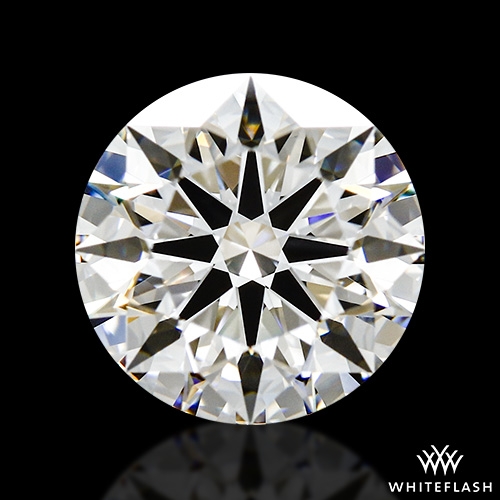
1.01 ct D VVS1 Round Cut Precision Lab Grown Diamond

1.01 ct D VVS1 Round Cut Precision Lab Grown Diamond from Whiteflash

Key Takeaways

  • HPHT stands for High Pressure High Temperature.
  • HPHT diamonds are real diamonds, not simulants such as moissanite or cubic zirconia.
  • The growth method can produce exceptionally colorless and transparent diamonds.
  • Some HPHT diamonds display blue nuance caused by boron.
  • Metallic inclusions are more commonly associated with HPHT growth.
  • An HPHT-grown diamond is different from a CVD diamond that has received HPHT treatment.
  • Growth method matters, but cut quality, transparency, and overall appearance matter more.
  • Always buy a lab-grown diamond with an independent grading report.

For a direct comparison of the two principal growth methods, read our guide to HPHT vs. CVD lab diamonds.

What Is an HPHT Lab-Grown Diamond?

An HPHT lab-grown diamond is a real diamond created using a combination of extreme pressure and high temperature.

HPHT stands for:

  • High Pressure
  • High Temperature

The process uses a small diamond seed, a carbon source, and a metallic solvent or catalyst. These materials are placed inside a specialized press and subjected to conditions designed to encourage the carbon to crystallize around the seed.

GIA reports that HPHT diamond growth typically involves pressures of approximately 5 to 6 GPa and temperatures of around 1,300°C to 1,600°C. Depending on the intended size and quality, growth may take anywhere from hours to several weeks.

The resulting rough crystal is then removed, assessed, and cut into a polished diamond.

Are HPHT Diamonds Real Diamonds?

Yes. HPHT lab-grown diamonds are real diamonds.

They possess essentially the same fundamental chemical, physical, and optical properties as natural diamonds. Both consist primarily of carbon atoms arranged in a diamond crystal structure.

HPHT diamonds have the same:

  • Hardness
  • Refractive properties
  • Fire
  • Brilliance
  • Crystal structure
  • General durability

They are not diamond imitations.
Moissanite and cubic zirconia may look similar to diamonds, but they are made from different materials and have different optical and physical properties. Our lab-grown diamonds vs. moissanite guide explains the differences.

The distinction between an HPHT diamond and a natural diamond is its origin. One forms inside the Earth, while the other is grown in a controlled manufacturing environment.

A recognized grading laboratory can distinguish between natural and laboratory-grown diamonds using advanced testing equipment.

How Are HPHT Diamonds Made?

HPHT diamond growth attempts to reproduce some of the conditions associated with diamond formation in the Earth.

The process usually involves five principal stages.

1. A Diamond Seed Is Selected

A thin piece of existing diamond is used as the foundation for growth.

The quality and preparation of this seed can affect the resulting crystal. It provides the structure on which new diamond material forms.

2. Carbon and Metallic Flux Are Added

The seed is placed inside a growth capsule with a carbon source, typically graphite.

A metallic solvent or catalyst is also used. This frequently contains metals such as iron, nickel, or cobalt.

3. The Capsule Is Placed Under Extreme Pressure

The growth capsule is loaded into a specialized press.

Common designs include:

  • Belt presses
  • Cubic presses
  • Split-sphere, or BARS, presses

These machines generate the intense pressure needed to support diamond crystal growth.

4. Carbon Dissolves and Moves Toward the Seed

Under the combination of extreme pressure and temperature, the metallic flux helps dissolve the carbon.

The seed is kept at a slightly cooler temperature than the carbon source. This causes dissolved carbon to move toward the seed and crystallize around it.

5. The Diamond Crystal Grows

The diamond gradually grows around the seed.

Once the desired crystal has formed, it is removed from the press, cleaned, and evaluated. The usable rough material is then planned, cut, and polished.

HPHT-Grown vs. HPHT-Treated Diamonds

One of the most important distinctions for buyers is the difference between an HPHT-grown diamond and an HPHT-treated diamond.

They are not necessarily the same thing.

HPHT-Grown Diamond

An HPHT-grown diamond was created using the High Pressure High Temperature process.

The term describes how the diamond itself was grown.

HPHT-Treated Diamond

HPHT treatment may be applied after a diamond has already formed.

For example, a CVD diamond may initially display a brown or gray tint. The manufacturer may subsequently expose it to high temperature and pressure to improve its color.

In that situation, the diamond is:

  • CVD-grown
  • HPHT-treated

It is not an HPHT-grown diamond.

HPHT treatment can be used to reduce or remove brown coloration in CVD-grown diamonds. The treatment changes the color but does not add further diamond material.

This distinction should be disclosed on a reputable grading report. Learn more in our guide to treated vs. untreated lab-grown diamonds.

What Do HPHT Diamonds Look Like?

A high-quality HPHT diamond can look indistinguishable from a comparable natural or CVD-grown diamond without specialized equipment.

HPHT growth can produce diamonds with:

  • Colorless or near-colorless appearance
  • High clarity
  • Strong transparency
  • Excellent brilliance when properly cut
  • A wide range of shapes and carat weights

Earlier generations of HPHT diamonds were more commonly associated with yellow-orange or blue colors. Manufacturing improvements have made colorless HPHT diamonds far more widely available.

However, not every colorless-grade diamond will appear perfectly neutral. Buyers should still inspect videos and photographs for blue, gray, yellow, or brown nuance.

Advantages of HPHT Lab-Grown Diamonds

HPHT diamonds can offer several advantages, although these qualities should never be assumed without examining the individual stone.

Strong Crystal Transparency

A well-grown HPHT diamond may have excellent transparency and a consistent crystal structure.

This can help produce a crisp, bright appearance, particularly when combined with precise cutting.

Some CVD diamonds display visible strain or graining caused by interruptions during layer-by-layer growth. HPHT diamonds do not grow in the same layered manner, so they are generally less associated with this particular type of growth strain.

However, an HPHT label alone does not guarantee perfect transparency. The diamond should still be inspected through high-resolution imagery and video.

High Color Grades

Modern HPHT production can create diamonds within the colorless D-to-F range.

This makes HPHT particularly appealing to buyers who want a very white-looking diamond without paying natural-diamond prices.

A high color grade is not always necessary. Many G or H diamonds will appear colorless when viewed face-up, particularly in round brilliant cuts.

Read our guide to lab-grown diamond color before paying extra for a D-grade stone.

High Clarity Is Widely Available

HPHT diamonds are commonly available in VS, VVS, and even internally flawless clarity grades.

However, extremely high clarity grades frequently provide little visible benefit. A well-selected VS1 or VS2 diamond can be completely eye-clean and offer better value than a VVS or internally flawless stone.

Our VVS lab-grown diamond guide explains when premium clarity grades may and may not be worthwhile.

No Requirement for Post-Growth Treatment

Many HPHT diamonds are sold in an as-grown condition without post-growth treatment.

IGI reports for untreated HPHT diamonds may specify the growth process and state that there is no indication of post-growth treatment.

An untreated diamond is not automatically better than a treated diamond, but some buyers prefer a stone that achieved its final color during the original growth process.

Good Availability in Smaller Sizes

HPHT technology has long been used to produce smaller diamonds, including melee stones used in pavé settings, halos, eternity rings, and diamond jewelry.

It is also capable of producing significantly larger gem-quality stones. The method is therefore not restricted to small diamonds.
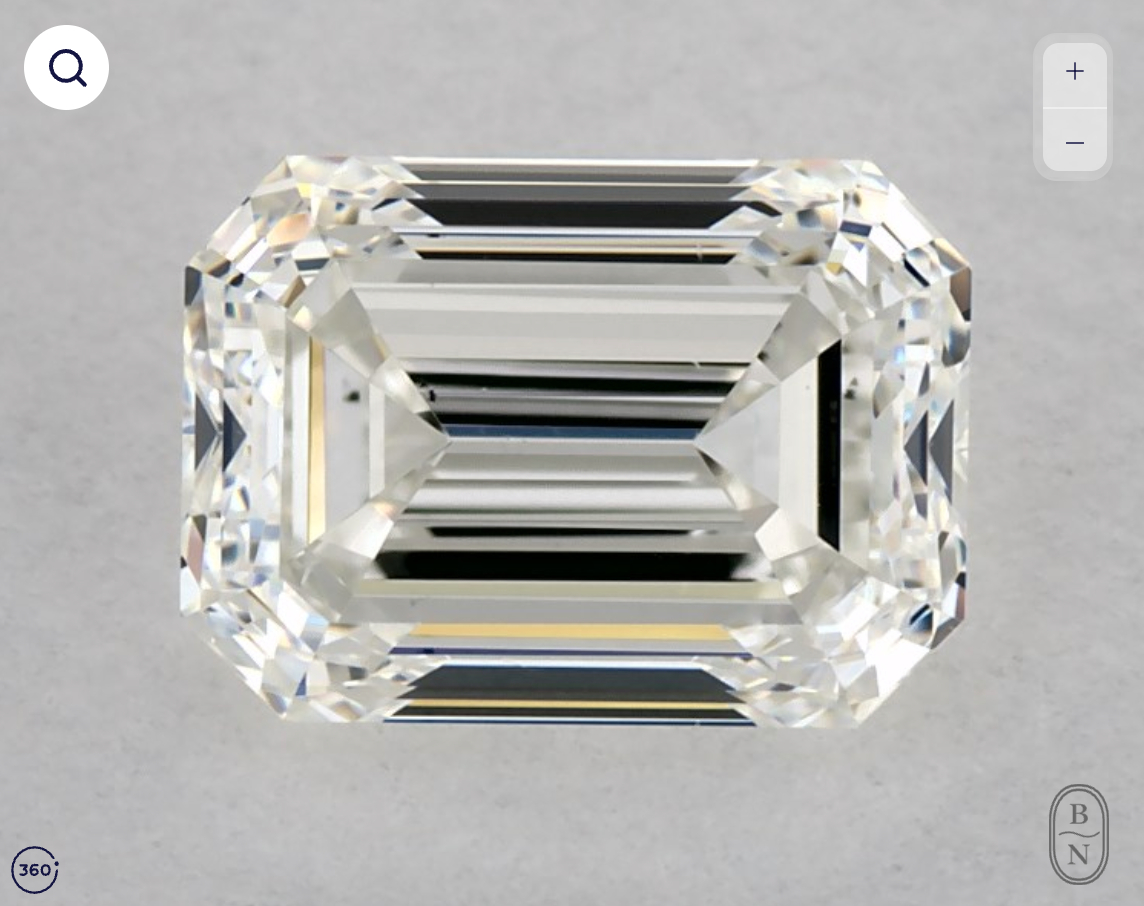
GIA 1.00 Carat Emerald Diamond


GIA 1.00 Carat Emerald Diamond

Where to Buy High-Quality HPHT Lab-Grown Diamonds

Whiteflash is our leading recommendation for buyers who prioritize cut quality, transparency, and light performance. Its Precision Lab diamonds are supported by detailed videos and advanced diagnostic images on qualifying stones, making it easier to evaluate more than the grading report alone.

Blue Nile offers a large lab-grown diamond inventory across numerous shapes, sizes, and quality combinations. Open the grading report for each diamond to confirm whether it was grown by HPHT or CVD.

Brilliant Earth combines a broad lab-grown diamond selection with an extensive range of modern and distinctive engagement ring settings. Growth methods vary across the inventory, so review the individual report before purchasing.

Whichever retailer you choose, prioritize the individual diamond’s cut, transparency, and appearance rather than selecting it solely because it was grown by HPHT.

For a more detailed comparison of these retailers, see our guide to the best places to buy lab-grown diamonds.

Potential Disadvantages of HPHT Diamonds

HPHT diamonds can be beautiful, but the growth method has several potential characteristics buyers should understand.

Blue Nuance

Some HPHT diamonds display a faint blue or gray-blue tint.

This can be caused by small amounts of boron within the crystal structure. Boron can produce blue color in both natural and laboratory-grown diamonds.

A diamond may receive a high color grade while still displaying a subtle blue nuance under certain lighting conditions.

Some buyers like this cool appearance, particularly in platinum or white gold. Others prefer a more neutral-looking diamond.

Blue nuance may be difficult to judge from the grading report alone. Examine the diamond through neutral, high-resolution video and compare it with other stones.

Metallic Inclusions

The metallic flux used during HPHT growth can occasionally become trapped inside the diamond.

Metallic iron or nickel features and metallic needles are distinctive inclusions that may occur in HPHT-grown diamonds.

These inclusions can appear:

  • Dark
  • Black
  • Reflective
  • Needle-like
  • Irregularly shaped

A small metallic inclusion may be completely invisible without magnification. Larger or centrally located inclusions may be more noticeable and could affect the diamond’s appearance.

Do not reject every HPHT diamond with a metallic inclusion. Instead, assess whether the stone is eye-clean and whether the inclusion affects transparency or durability.

Fluorescence and Phosphorescence

Some HPHT diamonds can react to ultraviolet light through fluorescence or phosphorescence.

Fluorescence occurs while the diamond is exposed to ultraviolet light. Phosphorescence is an afterglow that continues briefly after the ultraviolet source has been removed.

These effects are usually not visible during normal daily wear. However, strong blue or orange phosphorescence may occasionally be noticeable when moving from an ultraviolet environment into darkness.

Read our guide to fluorescence in lab-grown diamonds for a fuller explanation.

Possible Magnetic Response

Certain HPHT diamonds containing sufficient metallic material can show a response to a strong magnet.

This is not something most buyers will notice or need to test. It is primarily a consequence of metallic growth remnants rather than a sign that the stone is not a diamond.

A visible metallic inclusion is more relevant to a jewelry buyer than whether the diamond demonstrates a measurable magnetic response under specialized conditions.

Limited Information on Some Retailer Listings

Not every retailer makes it easy to filter diamonds by growth method.

You may need to open the grading report or contact customer service to determine whether a stone is:

  • HPHT-grown
  • CVD-grown
  • CVD-grown and HPHT-treated

Avoid assuming the growth method based on color, clarity, or appearance alone.

Are HPHT Diamonds Better Than CVD Diamonds?

HPHT diamonds are not universally better than CVD diamonds.

Both processes can create exceptional diamonds. Both can also produce lower-quality material.

A high-quality CVD diamond can be more attractive than a poorly grown or badly cut HPHT diamond, and the reverse is equally true.

The main differences are related to how the crystals grow and the characteristics that can result from each process.

CharacteristicHPHT diamondsCVD diamonds
Growth environmentHigh pressure and high temperatureLow-pressure chamber with carbon-rich gas
Growth structureCrystal grows through a metallic solutionDiamond material is deposited in layers
Potential color issueBlue or yellow nuanceBrown or gray nuance
Potential clarity issueMetallic inclusionsGraining, strain, or carbon remnants
Post-growth treatmentOften sold as grownFrequently treated to improve color
Overall qualityCan be excellentCan be excellent

A well-grown, well-cut diamond from either method can be a strong choice.

Our full HPHT vs. CVD comparison examines the differences in greater detail.

How to Read an HPHT Diamond Grading Report

A grading report is essential when purchasing a significant lab-grown diamond.

The report should identify the stone as laboratory-grown and provide information about its quality characteristics.

Check the Growth Method

Look in the comments or additional information section for wording identifying the stone as HPHT-grown.

Depending on the laboratory and report format, the wording may include:

  • Laboratory-grown diamond
  • HPHT growth process
  • Created by High Pressure High Temperature growth
  • As grown with no indication of post-growth treatment

Several report formats include comments specifying whether a diamond was produced through CVD or HPHT growth.

Confirm the Report Number

Enter the report number into the grading laboratory’s verification system.

Confirm that the online record matches the retailer’s information, including:

  • Carat weight
  • Measurements
  • Shape
  • Color
  • Clarity
  • Report date

The report number may also be laser-inscribed on the diamond’s girdle.

Review the Comments

Comments may disclose:

  • Growth method
  • Treatment information
  • Laser inscription
  • Additional inclusions
  • Features not shown on the clarity plot

Do not ignore this section. It may contain information that directly affects your understanding of the diamond.

For more help interpreting the document, read our guide to lab-grown diamond certification and our dedicated explanation of IGI lab-grown diamond reports.

How to Choose an HPHT Lab-Grown Diamond

Growth method should be only one part of your decision.

Use the following process to identify a high-quality HPHT diamond.

1. Prioritize Cut Quality

Cut has the greatest influence on brightness, fire, and sparkle.

An average-cut D VVS1 diamond may look less impressive than a precisely cut G VS1 diamond.

For round brilliant diamonds, review:

  • Table percentage
  • Total depth
  • Crown angle
  • Pavilion angle
  • Girdle thickness
  • Optical symmetry
  • Light-performance images

Terms such as “Excellent” and “Ideal” cover a range of quality. Two diamonds carrying the same laboratory cut grade can perform differently.

Our guide to lab-grown diamond cut quality explains what to look for.

2. Check for Blue Nuance

Review the diamond against a neutral background.

A blue tint may become easier to see when the diamond is viewed:

  • From the side
  • Against a white background
  • Beside a neutral comparison diamond
  • Under daylight-equivalent lighting

Do not rely solely on highly reflective videos, dark backgrounds, or jewelry store spotlights.

Ask the retailer whether the diamond has a noticeable blue or gray-blue nuance if the imagery is unclear.

3. Inspect the Inclusions

Open the clarity plot and magnified video.

Metallic inclusions may appear as dark or reflective spots. Their significance depends on:

  • Size
  • Position
  • Number
  • Visibility
  • Effect on transparency

An inclusion close to the girdle may be less noticeable than one directly beneath the table, although surface-reaching features should still be assessed for durability.

Most buyers will find VS1 or VS2 sufficient, provided the diamond is eye-clean.

4. Look for Strong Transparency

The diamond should appear crisp and lively rather than cloudy, sleepy, or dull.

Transparency problems can reduce brilliance even when the report shows respectable color and clarity grades.

Compare several diamonds under similar imaging conditions. Look at how clearly the facet pattern appears and how quickly the diamond returns light as it moves.

This is one reason very low prices can be misleading. Our guide to why you should avoid very cheap lab-grown diamonds explains where quality compromises may occur.

5. Choose a Sensible Color Grade

For most buyers, the best value is usually found somewhere within the F-to-H range.

A D-grade diamond provides the highest paper color grade but may not look noticeably whiter than an F or G diamond once mounted.

Consider:

  • Diamond shape
  • Carat weight
  • Setting color
  • Side profile
  • Personal sensitivity to color

Elongated and step-cut diamonds may show body color more readily than a round brilliant.

6. Avoid Unnecessary Clarity Premiums

HPHT diamonds are widely available in VVS and internally flawless grades, but these grades are rarely necessary for visual beauty.

Consider:

  • VS2 for strong value
  • VS1 for added reassurance
  • VVS2 when the price difference is small
  • VVS1, IF, or FL only when rarity on paper matters to you

The goal should be an eye-clean diamond with strong transparency, not simply the highest possible clarity grade.

7. Compare Measurements, Not Just Carat Weight

Carat measures weight rather than face-up size.

Two 2-carat diamonds can have noticeably different dimensions depending on:

  • Shape
  • Depth
  • Proportions
  • Girdle thickness
  • Cutting style

Compare the measurements listed on the report and avoid diamonds that conceal excessive weight in their depth.

8. Review the Return Policy

Even detailed photographs and videos cannot perfectly reproduce how a diamond will look in person.

Choose a retailer that provides enough time to inspect the stone under different lighting conditions.

When the diamond arrives, view it:

  • In daylight
  • Under normal indoor lighting
  • Away from jewelry store spotlights
  • From the side and face-up
  • Beside other colorless objects

Best Shapes for HPHT Lab-Grown Diamonds

HPHT diamonds are available in most popular shapes.

The best choice depends more on cutting quality and personal preference than the growth method.

Round Brilliant

Round diamonds are the easiest shape to assess using proportions and light-performance tools.

They are an excellent choice for buyers who want maximum brilliance. Read our round lab-grown diamond buying guide for recommended specifications.

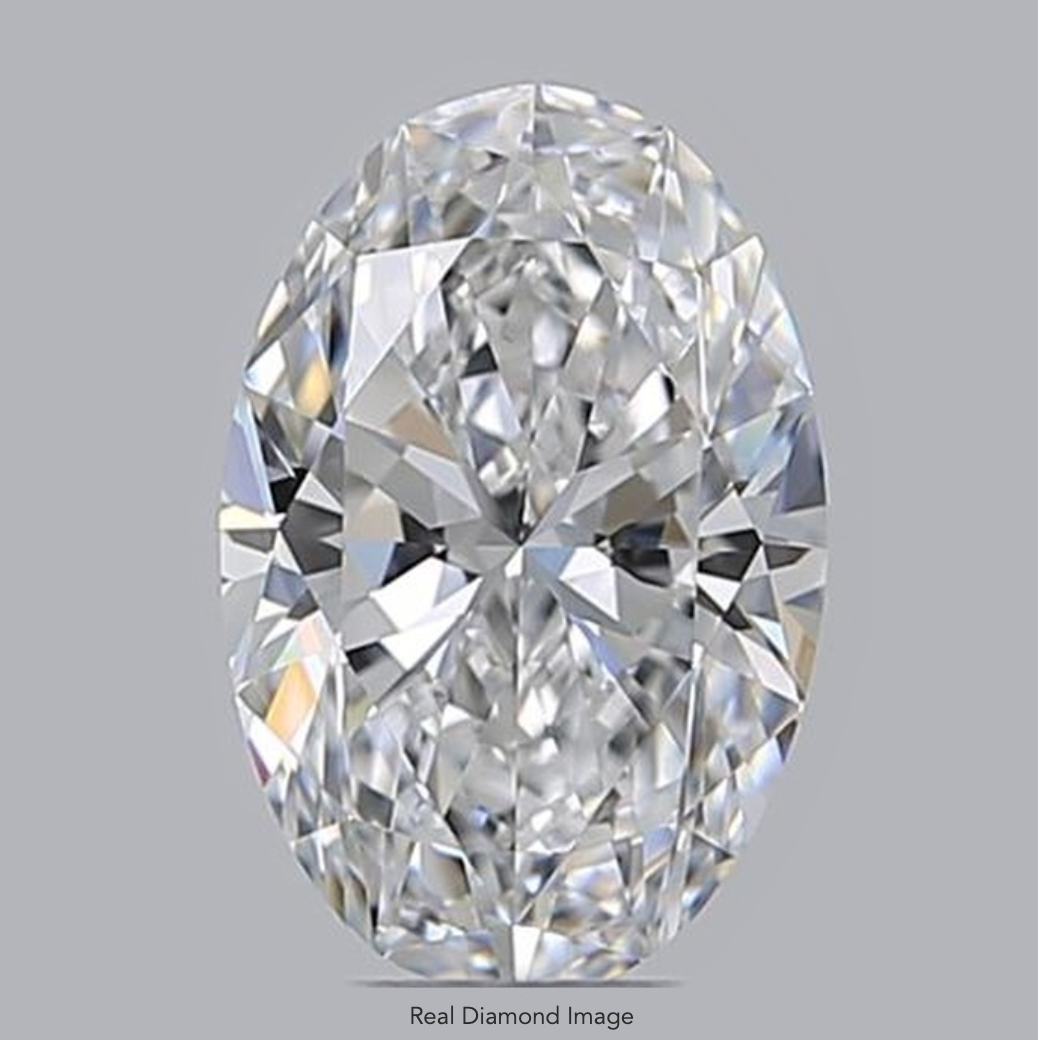
Oval

Oval diamonds provide a larger-looking face-up appearance for their weight.

Pay close attention to bow-tie contrast, symmetry, and outline. Our oval lab-grown diamond guide explains how to compare them.

Emerald Cut

Emerald cuts make color, transparency, and inclusions easier to see.

Choose a high-clarity stone with strong transparency and a balanced pattern of light and dark reflections.

Cushion and Radiant

Cushion and radiant cuts can hide color effectively because of their brilliant-style faceting.

However, their cutting patterns vary considerably, so videos are essential.

Pear and Marquise

These elongated shapes can appear large for their carat weight.

Check for symmetry, vulnerable points, and an overly dark bow tie through the center.

Are HPHT Diamonds More Expensive?

HPHT diamonds are not always more expensive than CVD diamonds.

The final price depends on:

  • Carat weight
  • Cut quality
  • Color
  • Clarity
  • Shape
  • Certification
  • Retailer
  • Brand positioning
  • Supply and demand

Growth method may influence production costs, but consumers should not assume that an HPHT diamond deserves a premium simply because it was made using high pressure and temperature.

Similarly, a lower-priced CVD diamond is not automatically inferior.

Compare stones based on their overall quality and appearance rather than trying to calculate value from the growth process alone.

Are HPHT Diamonds More Sustainable?

It is not possible to make a blanket claim that every HPHT diamond is environmentally friendly.

HPHT production requires substantial energy to generate extreme pressure and temperature. The environmental impact depends heavily on:

  • Energy source
  • Efficiency of the equipment
  • Manufacturing location
  • Number of usable diamonds produced
  • Transparency of the supplier

An HPHT diamond grown using renewable electricity may have a different environmental profile from one produced using electricity generated from fossil fuels.

The term “lab-grown” alone does not prove that a diamond is carbon neutral or sustainably produced.

Buyers interested in environmental claims should look for specific, independently supported information rather than broad marketing statements. Our guide to sustainability in the diamond industry explores the issue in more detail.

Compare HPHT Lab-Grown Diamonds Online

For premium cut quality: Shop Whiteflash

Whiteflash is the strongest starting point for buyers focused on precision cutting, light performance, and detailed imaging. Check each grading report to confirm the diamond’s growth method.

For a large selection: Explore Blue Nile

Blue Nile provides a broad inventory across numerous shapes and price points. Growth methods can vary, so open the individual report before ordering.

For distinctive settings: Browse Brilliant Earth

Brilliant Earth offers a wide variety of lab-grown diamonds alongside an extensive collection of contemporary engagement ring designs.

Do not assume every diamond stocked by these retailers is HPHT-grown. Confirm the growth process on the individual laboratory report.

You can also read our detailed reviews of Whiteflash, Blue Nile, and Brilliant Earth before deciding where to buy.

HPHT Diamond Red Flags

Be cautious when a retailer:

  • Does not provide an independent grading report
  • Hides the report until after purchase
  • Cannot confirm the growth method
  • Uses only heavily edited photographs
  • Provides no magnified video
  • Cannot comment on blue nuance
  • Describes every HPHT diamond as inherently superior
  • Focuses exclusively on color and clarity grades
  • Provides no meaningful return period
  • Makes unsupported environmental claims

The growth method should be treated as useful information, not as a substitute for proper quality assessment.

HPHT Lab-Grown Diamond Buying Checklist

Before purchasing, confirm that:

  1. The diamond has a report from a recognized independent laboratory.
  2. The report identifies the diamond as laboratory-grown.
  3. The comments confirm HPHT growth.
  4. The report number can be verified online.
  5. The cut proportions are suitable for the shape.
  6. The diamond displays strong light return.
  7. There is no unwanted blue or gray nuance.
  8. Metallic inclusions are not visible to the naked eye.
  9. The stone appears transparent and crisp.
  10. The measurements provide an appropriate face-up size.
  11. High-resolution images or video are available.
  12. The retailer offers a suitable inspection and return period.
  13. The price has been compared with similar diamonds.

Frequently Asked Questions

Are HPHT Lab-Grown Diamonds Good Quality?

They can be.

HPHT growth can produce colorless, high-clarity diamonds with excellent transparency. However, quality varies between individual stones.

The diamond’s cut, tint, inclusions, and transparency should all be reviewed before purchase.

Are HPHT Diamonds Better Than CVD Diamonds?

Not automatically.

HPHT diamonds may be less prone to the layered strain associated with some CVD growth, while CVD diamonds may avoid the metallic inclusions associated with HPHT production.

Excellent and poor-quality diamonds can be produced using either method.

Can a Jeweler Tell That a Diamond Is HPHT?

A jeweler cannot necessarily identify an HPHT diamond through ordinary visual inspection.

Specialized laboratories use advanced equipment to determine whether a diamond is natural, HPHT-grown, or CVD-grown.

The grading report should disclose its laboratory-grown origin and, depending on the report format, its production method.

Do HPHT Diamonds Test as Real Diamonds?

Yes.

Because HPHT stones are diamonds, they will generally react as diamonds on standard thermal conductivity testers.

However, basic handheld testers cannot reliably determine whether a diamond is natural or laboratory-grown. Advanced screening is required.

Do HPHT Diamonds Turn Cloudy?

A properly grown HPHT diamond should not simply become cloudy with age.

Any haziness seen when purchasing the diamond may be related to inclusions, transparency, dirt, or surface residue rather than the stone deteriorating.

Diamonds can collect oils and grime during wear, so regular cleaning is important.

Do HPHT Diamonds Change Color?

The color of a properly produced HPHT diamond should remain stable during normal wear.

Some stones can display different visual effects under ultraviolet light, but this is not the same as the diamond permanently changing color.

Are HPHT Diamonds Magnetic?

Some HPHT diamonds containing metallic inclusions may respond to a strong magnet.

This does not apply to every HPHT diamond and is not an everyday concern for most jewelry buyers.

What Is Blue Nuance in an HPHT Diamond?

Blue nuance is a subtle blue or gray-blue tint that can occur when boron is incorporated into the diamond during growth.

It may be attractive to some buyers but unwanted by others. The nuance may not be clearly expressed by the color grade, so videos and direct inspection are important.

Should I Avoid HPHT Diamonds With Blue Nuance?

Not necessarily.

A faint blue nuance can be attractive and may complement platinum or white gold settings. The decision is largely personal.

Avoid the stone when the blue tint is stronger than you prefer or makes the diamond look gray, cold, or unnatural to your eye.

Are Untreated HPHT Diamonds Better?

An untreated HPHT diamond achieved its final color during the growth process rather than through later treatment.

Some buyers prefer this, but untreated status does not guarantee better cutting, transparency, or beauty.

A treated diamond can still be stable, attractive, and valuable as jewelry when the treatment is properly disclosed.

Which Certification Is Best for an HPHT Diamond?

IGI is widely used for lab-grown diamonds and commonly provides detailed 4Cs grades alongside growth and treatment information.

GIA also analyzes and reports on laboratory-grown diamonds, although its current grading format differs from the traditional detailed grading approach used by IGI.

The most important factor is that the report comes from a recognized independent laboratory and can be verified.

Final Thoughts

HPHT lab-grown diamonds can offer excellent color, clarity, and transparency at prices significantly below comparable natural diamonds.

Their crystal growth process can produce extremely attractive material, but it can also result in distinctive characteristics such as blue nuance and metallic inclusions.

The best HPHT diamond is not necessarily the one with the highest color or clarity grade. It is the stone that combines:

  • Precise cutting
  • Strong light performance
  • Good transparency
  • An attractive, neutral appearance
  • Eye-clean clarity
  • Reliable independent certification
  • A competitive price

Use the HPHT designation as one piece of information rather than a guarantee of quality.

When two diamonds are under consideration, choose the one that looks better and performs more strongly, regardless of whether it was grown through HPHT or CVD.

You may also like

Leave a Comment

Welcome to Lab Diamonds Reviews

My primary goal is to offer a free diamond buying help service. With the myriad of choices available in the market, I understand the challenges buyers face.

Latest Blog Posts